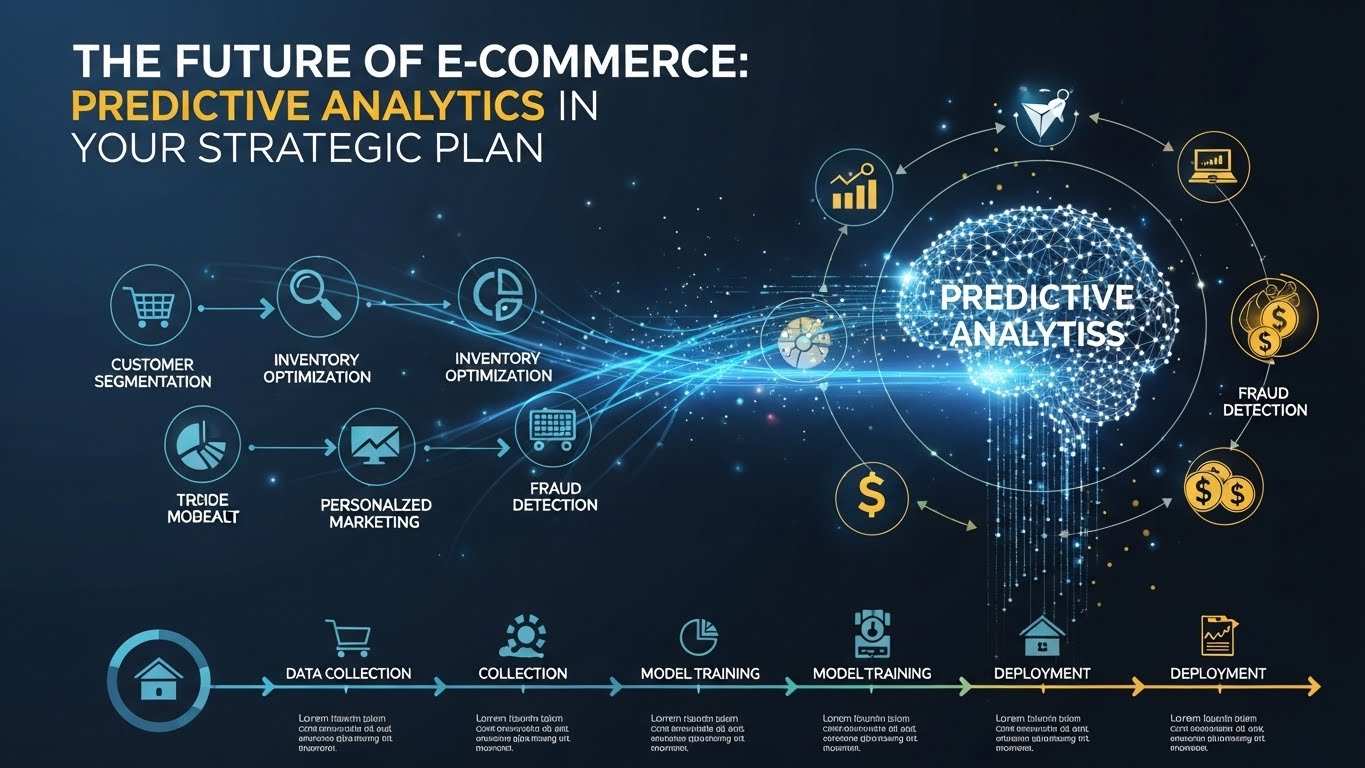
“The Future of E-commerce: Predictive Analytics in Your Strategic Plan”
Updated: April 8, 2026
The Future of E-commerce: Predictive Analytics in Your Strategic Plan
In the rapidly evolving landscape of e-commerce, staying ahead of the competition requires more than just a robust online presence. Companies are increasingly leveraging predictive analytics to anticipate customer needs, optimize operations, and enhance user experience. This powerful tool has become essential in the strategic planning of e-commerce businesses aiming to thrive in the future. In this blog post, we will explore the transformative role of predictive analytics in e-commerce, its benefits, and how to effectively integrate it into your strategic plan.
Understanding Predictive Analytics
Predictive analytics refers to the use of statistical algorithms and machine learning techniques to identify the likelihood of future outcomes based on historical data. By analyzing patterns and trends, businesses can gain valuable insights that enable them to make informed decisions. In the context of e-commerce, predictive analytics can forecast customer behavior, optimize pricing strategies, and streamline inventory management.
The Benefits of Predictive Analytics in E-commerce
The implementation of predictive analytics in e-commerce offers numerous advantages:
- Enhanced Customer Experience: By predicting customer preferences and purchase behavior, businesses can tailor their offerings and marketing strategies to meet individual needs. This personalization leads to improved customer satisfaction and loyalty.
- Optimized Inventory Management: Predictive analytics helps in accurately forecasting demand, reducing overstock and stockouts. This ensures that the right amount of inventory is available at the right time, minimizing storage costs and maximizing sales.
- Effective Marketing Strategies: By analyzing customer data, businesses can identify the most effective marketing channels and strategies. This targeted approach increases conversion rates and ROI.
- Improved Pricing Strategies: Dynamic pricing models powered by predictive analytics allow businesses to adjust prices based on demand, competition, and other external factors, ensuring competitiveness and profitability.
Integrating Predictive Analytics into Your E-commerce Strategy

To effectively integrate predictive analytics into your e-commerce strategy, consider the following steps:
1. Define Your Objectives
Before implementing predictive analytics, it is crucial to define your business objectives. Determine what you aim to achieve, whether it’s enhancing customer experience, improving inventory management, or optimizing pricing strategies. Clear objectives will guide your analytics efforts and ensure alignment with your overall business strategy.
2. Collect and Organize Data
Data is the foundation of predictive analytics. Collect data from various sources, including customer interactions, sales transactions, and website analytics. Organize this data to ensure it is clean, accurate, and ready for analysis. Consider using data management tools and software to streamline the process.
3. Choose the Right Tools and Techniques
Select the appropriate predictive analytics tools and techniques that align with your objectives. There are numerous software solutions available, ranging from open-source platforms to enterprise-level systems. Evaluate their features, scalability, and ease of integration with your existing systems.
4. Build a Skilled Team
Having a skilled team is essential for successful implementation. Employ data scientists and analysts who have expertise in statistical modeling and machine learning. Their knowledge will be invaluable in interpreting data and generating actionable insights.
5. Implement and Monitor
Once your predictive analytics system is in place, begin implementing the insights gained into your e-commerce strategy. Continuously monitor the outcomes and make adjustments as needed. The dynamic nature of e-commerce requires ongoing evaluation to ensure the effectiveness of your analytics efforts.
Examples of Predictive Analytics in Action
To illustrate the impact of predictive analytics in e-commerce, consider the following examples:
Case Study 1: Amazon
Amazon is a pioneer in using predictive analytics to enhance customer experience. By analyzing purchase history, browsing behavior, and demographic data, Amazon provides personalized recommendations to customers, significantly increasing conversion rates. Their recommendation engine is a testament to the power of predictive analytics in driving sales and customer satisfaction.
Case Study 2: Netflix

While primarily a streaming service, Netflix’s use of predictive analytics offers valuable insights for e-commerce businesses. Netflix analyzes viewing habits and preferences to recommend content that keeps users engaged. This approach can be mirrored in e-commerce by recommending products based on customer behavior, thus enhancing the shopping experience.
Challenges and Considerations
Despite its benefits, implementing predictive analytics in e-commerce comes with challenges:
- Data Privacy: With increasing concerns around data privacy, businesses must ensure compliance with regulations like GDPR. Transparent data handling and customer consent are crucial.
- Data Quality: The accuracy of predictive analytics depends on the quality of data. Incomplete or incorrect data can lead to inaccurate predictions and flawed strategies.
- Integration with Existing Systems: Seamlessly integrating predictive analytics tools with current systems can be complex. Businesses must ensure compatibility and interoperability to maximize benefits.
Takeaways
Predictive analytics is no longer a futuristic concept; it is a vital component of modern e-commerce strategies. By harnessing the power of data, businesses can anticipate customer needs, optimize operations, and drive growth. As the e-commerce landscape continues to evolve, companies that effectively integrate predictive analytics into their strategic plans will be well-positioned to thrive in an increasingly competitive market. Embrace this transformative technology and unlock the full potential of your e-commerce business.
Future Trends in Predictive Analytics for E-commerce
As technology advances, predictive analytics will continue to evolve, offering even more sophisticated tools and capabilities for e-commerce businesses. Here are some future trends to watch:
1. Artificial Intelligence and Machine Learning
The integration of artificial intelligence (AI) and machine learning with predictive analytics will enhance its capabilities significantly. These technologies enable systems to learn from data continuously, improving the accuracy and relevance of predictions over time. AI-driven predictive models can process vast amounts of data at unprecedented speeds, offering real-time insights that are crucial for agile decision-making in e-commerce.
2. Real-Time Analytics

The future of predictive analytics in e-commerce lies in real-time analysis. As businesses strive to offer instantaneous responses to customer actions, real-time analytics will become essential. By analyzing data as it is generated, companies can make immediate adjustments to their marketing strategies, inventory management, and customer interactions, enhancing the overall shopping experience.
3. Enhanced Personalization
Personalization will remain a key focus for e-commerce businesses, and predictive analytics will play a crucial role in delivering personalized experiences. By leveraging data from various touchpoints, businesses can create hyper-personalized marketing campaigns, product recommendations, and customer interactions, driving engagement and conversion rates.
4. Predictive Maintenance and Logistics
Beyond customer-facing applications, predictive analytics will transform supply chain and logistics operations. By predicting equipment failures and optimizing maintenance schedules, businesses can reduce downtime and improve operational efficiency. Similarly, predictive analytics can enhance logistics by forecasting demand, optimizing delivery routes, and reducing shipping costs.
The Role of Big Data
Big data is the backbone of predictive analytics. As data sources continue to expand, businesses must focus on effectively managing and analyzing this wealth of information. Leveraging big data allows companies to gain deeper insights into customer behavior, market trends, and operational inefficiencies. By integrating big data with predictive analytics, businesses can uncover hidden patterns and correlations that drive strategic decision-making.
Overcoming Barriers to Adoption
While the benefits of predictive analytics are clear, some businesses face barriers to adoption:
- Cost and Resource Constraints: Implementing predictive analytics can be costly, requiring significant investment in technology and skilled personnel. Small and medium-sized businesses may find it challenging to allocate resources for such initiatives.
- Complexity of Implementation: The complexity of setting up predictive analytics systems can deter businesses. A clear implementation plan and the selection of user-friendly tools can help overcome this barrier.
- Data Silos: Data silos within organizations can hinder the effectiveness of predictive analytics. Businesses must break down these silos and ensure seamless data integration across departments.
Conclusion: Embracing the Future

In conclusion, predictive analytics represents a transformative force in the e-commerce sector, offering businesses the ability to make data-driven decisions that enhance customer experience, optimize operations, and drive growth. As technology continues to evolve, the capabilities of predictive analytics will expand, providing even greater opportunities for businesses to thrive in a competitive marketplace.
By understanding the potential of predictive analytics and addressing the challenges associated with its implementation, e-commerce businesses can position themselves for long-term success. Those who embrace this powerful tool will be better equipped to navigate the complexities of the digital landscape and capitalize on emerging opportunities.
As we look to the future, the integration of predictive analytics into e-commerce strategy is not just a competitive advantage—it’s a necessity. By staying ahead of the curve and leveraging the latest advancements in technology, businesses can ensure they remain relevant and successful in an ever-changing environment.
Building a Culture of Data-Driven Decision Making
For predictive analytics to truly transform an e-commerce business, it’s essential to foster a culture of data-driven decision-making across the organization. This involves not only using data to guide strategic decisions but also ensuring that every team member understands the value of data and how it can be leveraged to improve outcomes.
1. Educate and Empower Employees
Start by educating employees on the basics of predictive analytics and its benefits. Workshops, training sessions, and seminars can help demystify the technology and empower employees to embrace data-driven approaches. Encourage team members to experiment with data and analytics tools, fostering an environment where innovation and learning are valued.
2. Align Leadership and Strategy
Leadership buy-in is crucial for the successful implementation of predictive analytics. Ensure that executives and decision-makers understand the strategic importance of analytics and are committed to supporting its integration into business processes. Aligning analytics initiatives with the organization’s overarching goals ensures that data-driven decisions contribute to achieving strategic objectives.
3. Implement Collaborative Tools
Invest in collaborative tools that facilitate data sharing and communication across departments. Platforms that enable real-time data access and analysis empower teams to work together more effectively, breaking down silos and promoting a unified approach to achieving business goals. This collaborative environment is critical for maximizing the impact of predictive analytics.
Measuring the Impact of Predictive Analytics
To gauge the success of predictive analytics initiatives, businesses must establish clear metrics and KPIs. These metrics should align with the organization’s strategic goals and provide a clear picture of how analytics efforts are contributing to business performance.
- Customer Satisfaction and Retention: Measure changes in customer satisfaction levels and retention rates. Improved personalization and customer experience, driven by predictive analytics, should result in higher satisfaction and long-term loyalty.
- Sales and Revenue Growth: Track increases in sales and revenue attributed to more effective marketing campaigns, optimized pricing strategies, and enhanced inventory management.
- Operational Efficiency: Evaluate improvements in operational efficiency, such as reduced inventory carrying costs, faster order fulfillment, and decreased downtime in logistics and supply chain operations.
The Global Impact of Predictive Analytics in E-commerce
The influence of predictive analytics extends beyond individual businesses to the global e-commerce landscape. By enabling companies to operate more efficiently and meet customer needs more effectively, predictive analytics contributes to the overall growth and evolution of the industry.
As more businesses adopt predictive analytics, we can expect to see a shift towards more customer-centric, data-driven commerce. This shift will lead to increased competition, innovation, and advancement in the e-commerce sector, benefiting consumers and businesses alike.
Final Thoughts
Predictive analytics is not just a trend—it’s a critical component of a successful e-commerce strategy. By leveraging data to anticipate customer needs, optimize operations, and make strategic decisions, businesses can gain a competitive edge in the digital marketplace.
As technology continues to advance, the potential applications and benefits of predictive analytics will only grow. E-commerce businesses that embrace this powerful tool and integrate it into their strategic plans will be well-equipped to navigate the complexities of the future and achieve sustained success.
In this dynamic and ever-evolving industry, the ability to predict and respond to change is invaluable. By investing in predictive analytics today, businesses can shape a prosperous future tomorrow.