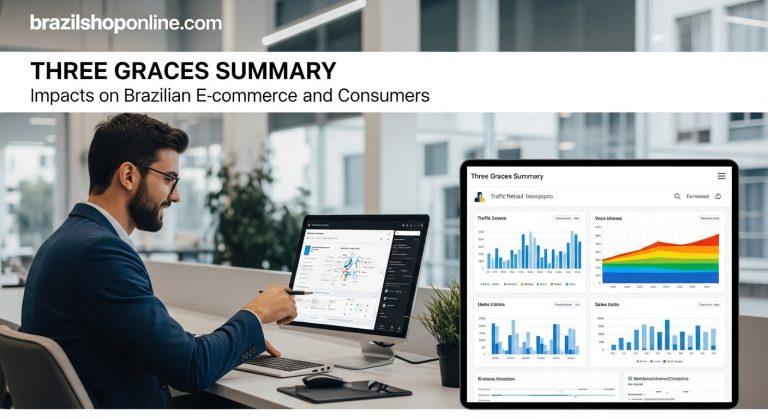
Brazilian e-commerce landscape with logistics and data visualization.
Updated: April 8, 2026
The phrase down E-commerce Brazil has emerged in boardroom and newsroom discussions as Brazil’s online retail cooling becomes the latest macro story. After a burst of pandemic-era growth, stakeholders are weighing what comes next for marketplaces, merchants, and millions of Brazilian shoppers navigating payments, shipping, and trust in digital channels. This piece treats the trend as a cross-cutting signal about how consumer behavior, logistics, and platform economics intersect in a market that remains among the most dynamic in Latin America.
Macro Drivers Behind the Down E-commerce Brazil Trend
Several macro factors are converging to slow the once-relentless ascent of online sales. Inflationary pressure has cooled household purchasing power, even as interest rates stay elevated enough to affect consumer credit. In parallel, the exchange rate and import costs continue to influence pricing strategies, pushing retailers to optimize margins rather than chase growth at any cost. On the supply side, Brazil’s logistics backbone—last-mile networks, warehouse density, and cross-city delivery speeds—remains uneven, with major urban centers seeing faster service than remote towns. These frictions elevate shipping costs and delivery times, nudging price-conscious shoppers toward familiar galleries and trusted local sellers rather than broad, search-driven marketplaces.
Digital payment adoption remains a pillar of e-commerce resilience, but the mix of payment methods matters. Brazilian consumers increasingly combine credit options with fintech wallets and buy-now-pay-later tools; however, merchant fees and settlement cycles can squeeze smaller sellers who depend on volume rather than premium conversion. The combination of higher operating costs and tighter consumer wallets creates a more selective growth environment where only those with efficient fulfillment, adaptable pricing, and credible reputations can sustain momentum.
Impacts on Consumers and Small Sellers
For shoppers, the downshift translates into more discerning online shopping behavior. Price sensitivity rises, promotions become more critical, and delivery promises weigh as heavily as product features. Returns policy clarity and post-sale support also gain importance in maintaining trust, particularly as digital storefronts multiply in Brazil’s fragmented retail landscape. In this environment, the consumer experience—speed, predictability, and transparent fees—can become a differentiator between a brand that survives a dip and one that falters.
Small and medium-sized sellers feel a twofold pressure. First, marketplaces that dominate traffic may tighten promotional calendars, pressuring margins for lower-volume sellers who rely on discovery algorithms. Second, operational fragility becomes more visible when delivery windows slip or when payment settlements delay cash flow. The result is a reallocation of risk: shops with stronger omnichannel capabilities, regional logistics, and diversified payment rails tend to weather a contraction better, while peers that relied on a single channel risk losing share to more adaptable rivals.
Pathways to Recovery: Policy, Logistics, and Market Dynamics
Recovery is not a monolith. Analysts and operators point to three interlocking pathways that could reaccelerate growth in Brazil’s online retail ecosystem:
- Enhancing logistics efficiency: Investment in regional warehousing, streamlined last-mile networks, and cross-border customs automation can reduce delivery times and costs. A more predictable logistics environment makes e-commerce a viable option for a broader set of consumers, including those in smaller cities where online shopping has lagged historically.
- Expanding digital payments and credit access: A diversified payments landscape—combining cards, wallets, QR-based methods, and accessible BNPL options—can broaden eligibility and reduce cart abandonment. Lower friction in checkout translates into higher conversion, especially in price-sensitive segments.
- Stabilizing macro conditions and policy support: Sound macro policy that curbs inflation, steadies currency volatility, and supports small businesses with favorable tax and compliance regimes can restore confidence. Government programs that incentivize digital inclusion, e-commerce literacy, and SME export readiness may amplify the positive feedback loop between consumer demand and merchant supply.
In scenario framing, the base case assumes gradual macro stabilization, incremental logistics improvements, and continued but steadier e-commerce growth driven by customer retention. A best-case scenario would leverage accelerated infrastructure investments, faster fintech integration, and more favorable tax environments to rekindle rapid online expansion. A worst-case path would hinge on renewed financial stress or policy shocks that curb consumer spending and tighten merchant financing—a reminder that recovery depends on coordination across public and private sectors.
Actionable Takeaways
- Retailers should diversify fulfillment: combine regional warehousing with flexible last-mile options to boost delivery speed and reduce costs.
- Invest in omnichannel capabilities: synchronize online and offline touchpoints to improve trust, especially around returns and after-sales support.
- Expand payment rails: offer multiple Brazilian payment methods and BNPL options to lower cart abandonment and widen access for price-sensitive shoppers.
- Prioritize data and customer experience: use behavioral insights to optimize pricing, promotions, and product assortments aligned with regional preferences.
- Strengthen financial health for SMEs: provide clearer cash-flow planning tools, transparent fee structures, and access to affordable working capital.
- Monitor infrastructure investments: advocate for improvements in logistics and cross-border commerce to unlock regional growth and resilience.
Source Context
To situate this analysis within current signals, the following sources offer related data and perspectives on Brazil’s e-commerce ecosystem and market pressures.