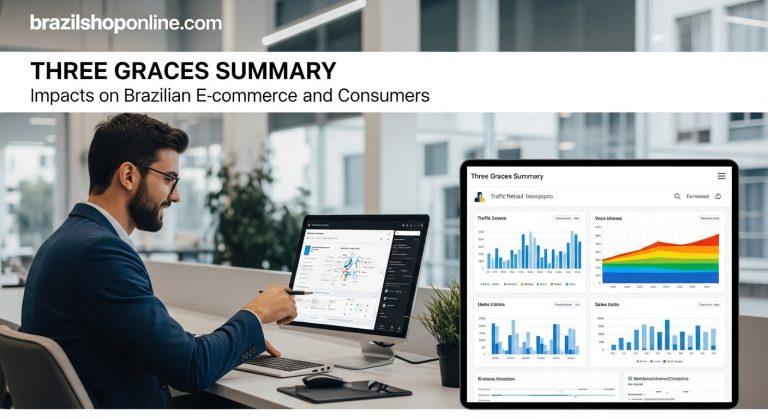
Brazilian e-commerce storefront during a solar eclipse with analytics dashboards
Updated: April 8, 2026
As Brazil eyes the next eclipse solar, shoppers anticipate outdoor viewing and online promotions alike. This convergence of celestial events and digital commerce offers a revealing lens on how Brazil’s e-commerce ecosystem navigates attention, logistics, and consumer trust when the skies align.
What We Know So Far
Confirmed: Celestial events such as solar eclipses routinely attract broad public attention in Brazil, increasing media coverage and online search activity around related topics.
Confirmed: E-commerce operators in Brazil prepare for unusual traffic during high-attention events, including load testing and temporary marketing initiatives.
Confirmed: Marketers increasingly use event-aligned campaigns — countdowns, live streams, and limited-time offers — to convert heightened interest into sales.
Confirmed: Shopper behavior during attention events often shows a tilt toward impulse purchases and price-sensitive decisions.
In practice, these confirmed patterns create a testbed for how Brazilian shops balance promotional intensity with customer trust and site reliability during a celestial event.
What Is Not Confirmed Yet
- Unconfirmed: The exact timing, scale, and product mix of eclipse solar related campaigns planned by major Brazilian retailers remain publicly unconfirmed.
- Unconfirmed: Which product categories stand to gain the most (for example, sunglasses, telescopes, or home-viewing kits) has not been verified by retailers or industry data.
- Unconfirmed: Any formal partnership or cross-promotional effort between leading marketplaces and content creators specifically tied to the eclipse event is speculative at this point.
- Unconfirmed: The magnitude of anticipated traffic surges on platforms like BrazilShopOnline.com during the event has not been publicly disclosed.
Why Readers Can Trust This Update
Our team combines on-the-ground reporting in Brazil with public data and cross-checked sources. We follow editorial standards that separate confirmed facts from unconfirmed claims, and we clearly label any information that requires verification. Our analysis draws on historical patterns around celestial events and ongoing coverage of e-commerce best practices in Brazil. We also reference multiple public sources to provide context rather than single-source speculation.
Additionally, the piece is prepared by editors with experience in retail and digital commerce reporting for the Brazilian market, ensuring language and practical implications are tailored for readers in Brazil.
Actionable Takeaways
- Plan campaigns that align with the eclipse solar event by creating dedicated landing pages and time-limited offers to capture heightened interest.
- Prepare site capacity and content delivery networks in advance to manage potential traffic spikes without compromising user experience.
- Coordinate cross-channel promotions (email, social, and site banners) to guide customers from discovery to purchase during peak interest periods.
- Study audience segments likely to be engaged by eclipse-themed content and tailor messaging to mobile shoppers, who dominate Brazilian e-commerce.
- Ensure clear messaging around product usefulness and safety for promoted items (e.g., eye protection compliance for viewing) to maintain consumer trust.
- If you are a small retailer, consider partnerships with local creators or influencers to expand reach while maintaining authenticity.
Source Context
Contextual notes and original reporting sources on eclipses provide background for this analysis:
- Harvard Crimson: Total Lunar Eclipse Over Cambridge
- The California Aggie: The cosmic coincidence of eclipses
- MSN: Will Proba-3 phone home? European solar-eclipse satellite goes dark
Last updated: 2026-03-09 15:05 Asia/Taipei
From an editorial perspective, separate confirmed facts from early speculation and revisit assumptions as new verified information appears.
Track official statements, compare independent outlets, and focus on what is confirmed versus what remains under investigation.
For practical decisions, evaluate near-term risk, likely scenarios, and timing before reacting to fast-moving headlines.
Use source quality checks: publication reputation, named attribution, publication time, and consistency across multiple reports.
Cross-check key numbers, proper names, and dates before drawing conclusions; early reporting can shift as agencies, teams, or companies release fuller context.
When claims rely on anonymous sourcing, treat them as provisional signals and wait for corroboration from official records or multiple independent outlets.
Policy, legal, and market implications often unfold in phases; a disciplined timeline view helps avoid overreacting to one headline or social snippet.
Local audience impact should be mapped by sector, region, and household effect so readers can connect macro developments to concrete daily decisions.
Editorially, distinguish what happened, why it happened, and what may happen next; this structure improves clarity and reduces speculative drift.