Understanding the Impact of Recent E-commerce Regulations on Your Business
The dynamic landscape of e-commerce is continuously reshaped by emerging technologies, consumer behavior shifts, and evolving regulations. The latter, in particular, has seen significant changes in recent years, with governments worldwide implementing new rules to address privacy concerns, enhance consumer protection, and ensure fair competition. As an e-commerce business owner, it’s crucial to understand these regulations’ impact on your operations. This blog post will delve into the recent changes in e-commerce regulations and how they can affect your business.
The Emergence of New E-commerce Regulations
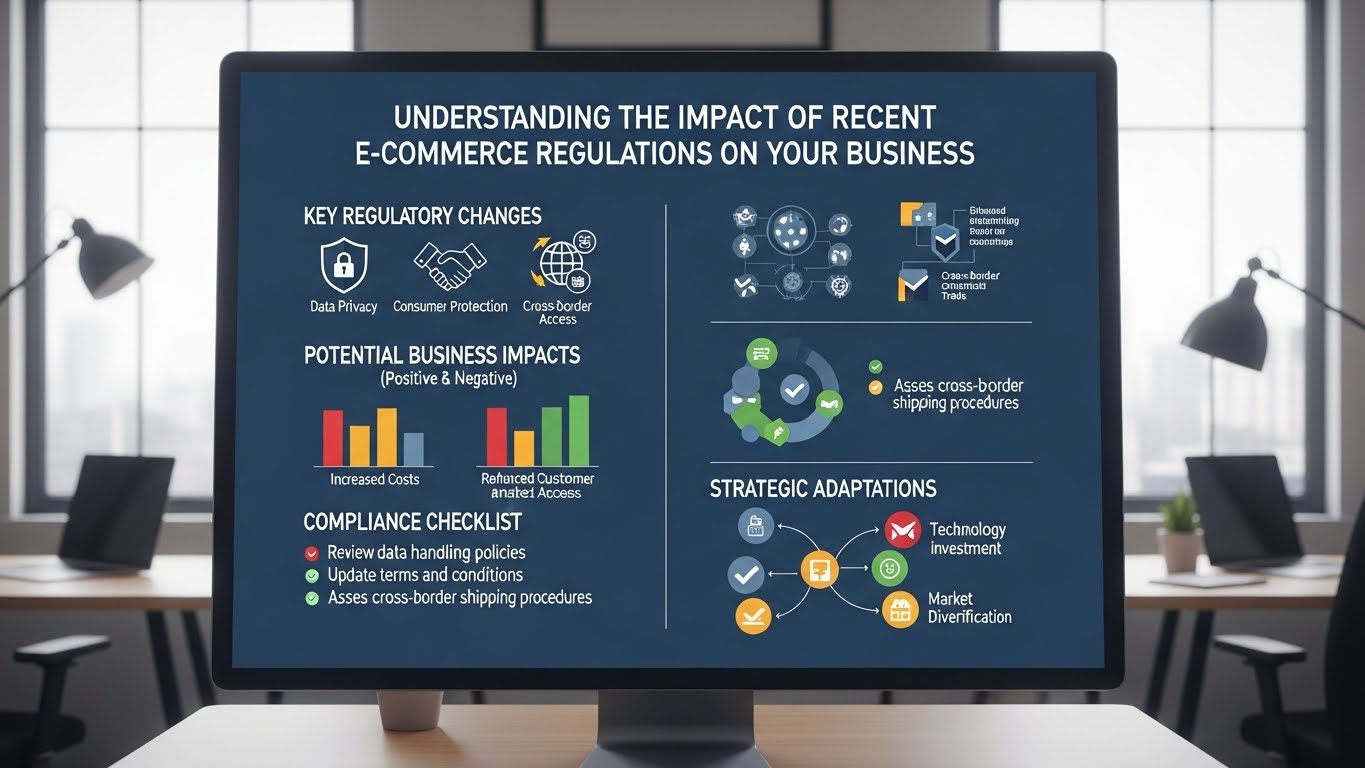
In the past few years, several countries have introduced new e-commerce regulations to address various issues ranging from data privacy to cross-border trade. For instance, the European Union’s General Data Protection Regulation (GDPR) has set a high standard for data protection worldwide. Similarly, the California Consumer Privacy Act (CCPA) has been a significant regulation in the United States, focusing on giving consumers control over their personal information.
These regulations aim to protect consumers from potential abuses, ensure transparency in business practices, and foster trust in online transactions. However, they also place additional responsibilities on businesses, which must navigate complex legal landscapes to comply with these new standards.
Privacy Concerns and Data Protection
One of the most significant impacts of recent e-commerce regulations is the increased emphasis on data privacy and protection. With the introduction of GDPR in the EU and similar regulations in other regions, businesses are now required to handle customer data with greater care. This includes obtaining explicit consent for data collection, providing customers with access to their data, and ensuring secure storage and processing of personal information.

Failure to comply with these regulations can result in hefty fines and damage to a company’s reputation. Therefore, businesses must invest in robust data protection measures and regularly update their privacy policies to reflect current legal requirements.
Cross-border E-commerce and Tax Implications
The rise of cross-border e-commerce has prompted governments to reevaluate their tax policies. Many countries have introduced new tax regulations to ensure that online businesses pay their fair share of taxes, regardless of where they are based. For example, the EU’s new rules on VAT for e-commerce, effective from July 2021, require non-EU sellers to collect VAT on all sales to EU consumers.
These changes can significantly impact businesses’ pricing strategies and profit margins. Companies need to familiarize themselves with the tax obligations in each market they operate in and consider utilizing services that help manage cross-border transactions and tax compliance.
Consumer Protection and Fair Competition
Recent regulations also aim to enhance consumer protection and ensure fair competition in the e-commerce sector. This includes measures to prevent fraudulent activities, misleading advertising, and exploitative practices. For instance, the EU’s New Deal for Consumers strengthens consumer rights and imposes stricter penalties on businesses that violate these rights.
Businesses must be transparent in their dealings, provide accurate product descriptions, and ensure that their marketing practices are honest and fair. Additionally, they must be prepared to handle consumer complaints efficiently and comply with dispute resolution processes.
Technological Advancements and Regulatory Challenges

As technology evolves, so do the challenges associated with regulating e-commerce. The rise of artificial intelligence, blockchain, and other emerging technologies presents both opportunities and regulatory hurdles. For example, AI can enhance customer service and streamline operations, but it also raises concerns about ethical use and data privacy.
Regulators are working to create frameworks that address these challenges without stifling innovation. Businesses must stay informed about technological developments and ensure that their use of technology complies with existing and forthcoming regulations.
Strategies for Navigating E-commerce Regulations
Adapting to the changing regulatory landscape requires a proactive approach. Here are some strategies that can help businesses navigate recent e-commerce regulations:
- Stay Informed: Regularly monitor regulatory updates and industry news to stay ahead of changes. Subscribing to newsletters from regulatory bodies or industry associations can provide valuable insights.
- Seek Legal Advice: Consulting with legal experts specializing in e-commerce law can help ensure compliance and mitigate risks associated with non-compliance.
- Invest in Compliance Tools: Utilize software solutions designed to manage data protection, tax compliance, and other regulatory requirements.
- Train Your Team: Ensure that your employees are aware of the latest regulations and their implications for business operations. Regular training sessions can help foster a culture of compliance.
The Future of E-commerce Regulation
As e-commerce continues to grow, so will the regulatory scrutiny surrounding it. Future regulations are likely to focus on emerging technologies, sustainability, and ethical business practices. For instance, there is an increasing push towards sustainable consumption and production, which may lead to regulations targeting the environmental impact of e-commerce.

Businesses must be prepared to adapt to these changes by adopting sustainable practices, leveraging technology responsibly, and maintaining transparency with consumers. By doing so, they can not only comply with regulations but also gain a competitive advantage in the market.
Takeaways
Understanding and adapting to recent e-commerce regulations is crucial for businesses looking to thrive in an increasingly complex legal environment. By focusing on data protection, tax compliance, consumer rights, and ethical use of technology, businesses can navigate these challenges effectively. Staying informed, seeking expert advice, and investing in compliance tools are essential strategies for ensuring long-term success in the e-commerce industry.
While regulations may pose challenges, they also present opportunities for businesses to build trust with consumers and differentiate themselves in a crowded market. By embracing these changes and taking a proactive approach to compliance, businesses can position themselves for success in the ever-evolving world of e-commerce.
Leveraging Regulations for Competitive Advantage
While compliance with e-commerce regulations is necessary, it also offers businesses the opportunity to gain a competitive edge. By demonstrating a commitment to legal and ethical standards, companies can enhance their reputation and build stronger relationships with customers. Here are some ways businesses can leverage regulations to their advantage:
- Enhance Brand Trust: By prioritizing data protection and consumer rights, businesses can foster trust and loyalty among customers. Make privacy policies and data-handling practices transparent to reassure customers of their safety.
- Differentiate Through Compliance: Use compliance as a unique selling proposition. Highlighting adherence to regulations in marketing materials can set a business apart from competitors who may not prioritize these aspects.
- Adopt Sustainable Practices: As sustainability becomes a focus of regulatory efforts, businesses that proactively implement environmentally-friendly practices can appeal to eco-conscious consumers and meet emerging regulatory standards.

Preparing for Future Regulatory Changes
The regulatory environment for e-commerce is constantly evolving, and businesses must be prepared for future changes. Here are some strategies for staying ahead:
- Engage with Industry Groups: Participate in industry associations and forums to stay informed about potential regulatory changes and share insights with peers.
- Develop a Compliance Roadmap: Create a roadmap that outlines steps for ongoing compliance with current and anticipated regulations. Regularly review and update this roadmap to address new developments.
- Foster Innovation in Compliance: Encourage innovation in compliance strategies by exploring new technologies and processes that can streamline regulatory adherence.
Case Studies: Successful Adaptation to E-commerce Regulations
Several e-commerce businesses have successfully navigated regulatory changes by adopting innovative approaches and prioritizing compliance. Below are two examples:
Case Study 1: Global Retailer Embraces GDPR
A well-known global retailer successfully adapted to the GDPR by implementing a comprehensive data protection strategy. The company invested in data encryption technologies and enhanced customer data access controls. Additionally, they launched an awareness campaign to educate customers about their rights under the GDPR. As a result, the retailer not only achieved compliance but also saw an increase in customer trust and engagement.
Case Study 2: Cross-Border E-commerce Platform Navigates VAT Changes

An international e-commerce platform faced challenges with the new EU VAT regulations. To address these, the company partnered with a tax compliance software provider to automate VAT collection and reporting. They also adjusted their pricing strategy to account for the new tax obligations. By doing so, the platform maintained its competitive pricing and ensured seamless transactions for its EU customers.
The Role of Technology in Regulatory Compliance
Technology plays a pivotal role in helping businesses comply with e-commerce regulations. From data protection to tax compliance, technological solutions can streamline processes and reduce the burden of compliance. For instance:
- Data Management Platforms: These platforms help businesses securely store and manage customer data, ensuring compliance with privacy regulations.
- Automated Tax Solutions: Software solutions can automate tax calculations and reporting for cross-border transactions, simplifying compliance with international tax laws.
- AI-Powered Compliance Tools: AI can be leveraged to monitor transactions for suspicious activities and ensure adherence to consumer protection standards.
Conclusion: Embracing a Compliance Culture
In the ever-evolving world of e-commerce, regulatory compliance is not just a legal obligation but an opportunity to build a resilient and trustworthy business. By embracing a culture of compliance, businesses can protect themselves from legal risks, enhance their reputation, and ultimately drive growth.
As new regulations emerge, staying informed, investing in the right tools, and adopting proactive strategies will be key to navigating the challenges and seizing the opportunities that come with regulatory changes. By doing so, businesses can position themselves as leaders in the industry, ready to meet the demands of a changing marketplace while ensuring a positive experience for their customers.
About the Author